How to Operate the Pipe Chain Conveyor More Effectively and the Methods for Handling Faults
Operating a pipe chain conveyor efficiently requires more than just pressing a button—it’s about precision, timing, and maintenance. This guide explores smart ways to boost your system’s performance, avoid common breakdowns, and keep material flow smooth. Learn expert fault-handling methods and discover why the Audop Pipe Chain Conveyor is a trusted solution in modern material handling.
In the world of modern material handling, the pipe chain conveyor stands out for its versatility, enclosed design, and ability to move bulk materials cleanly and efficiently. Whether you’re conveying powders, granules, or small particles, this system can handle complex layouts and long distances with minimal dust and spillage. But like any piece of industrial equipment, how you operate and maintain it can make all the difference in its performance and longevity.
1. Understand the System’s Structure and Working Principle
Before diving into operation, it’s essential to understand what makes the system tick. A pipe chain conveyor consists of a continuous chain with discs (or paddles) that move along a closed pipe. As the chain circulates, the discs push the material forward, creating a smooth and consistent conveying motion.
If you’re new to this technology, it’s worth checking out the Audop Pipe Chain Conveyor, which is designed for stable operation, low noise, and easy maintenance. Its structure ensures efficient conveying even for materials that are fragile or prone to dust generation.
2. Tips for Operating the Pipe Chain Conveyor More Effectively
Operating the system efficiently is not just about turning it on and off—it’s about fine-tuning every detail. Here are some best practices:
Start with a Clean and Empty System: Before each run, make sure the conveyor is free of leftover materials that could cause blockages or wear.
Control Feeding Volume: Overloading the conveyor can increase chain tension and reduce service life. Aim for a steady and moderate feeding rate.
Regular Chain Tension Checks: A properly tensioned chain is critical for smooth movement. Too loose, and it might slip; too tight, and it could strain the motor and sprockets.
Lubrication and Cleaning: Keep the chain and bearings well-lubricated and free from dust accumulation. Clean pipes periodically to avoid build-up that can restrict flow.
Monitor Noise and Vibration: Any unusual sound or vibration is often the first sign of mechanical wear or misalignment.
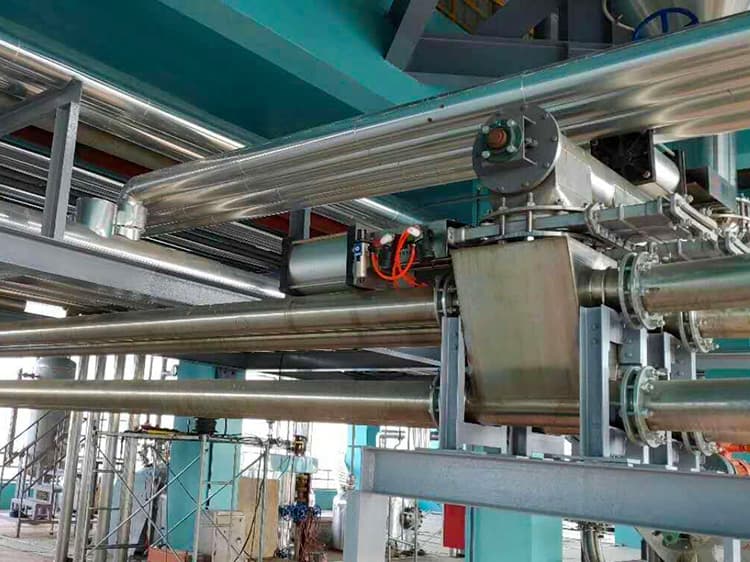
3. Common Faults and How to Handle Them
Even with the best operation, faults can occur. Here’s how to troubleshoot some of the most frequent issues:
Material Blockage: This is often caused by excessive feeding or sticky materials. Stop the machine immediately, open the inspection port, and clear the blockage. Adjust the feeding speed before restarting.
Chain Slipping or Breaking: Usually a result of overloading or poor tension control. Check the chain tension, sprocket wear, and ensure the drive motor operates at the correct torque.
Abnormal Noise: Metallic noises can mean chain or disc friction against the pipe. Inspect for misalignment or worn components and replace them promptly.
Inefficient Conveying: If material flow slows down, look for accumulated residues inside the pipe or worn discs that fail to push materials effectively.
For more detailed product information and maintenance guidance, you can refer to the Audop Pipe Chain Conveyor, which provides reliable operation and user-friendly maintenance solutions.
4. Preventive Maintenance Is Key
The best way to avoid faults is through regular preventive maintenance. Schedule inspections for chain wear, disc integrity, and drive unit performance. Keep a logbook to track maintenance activities and replace critical components before they reach their wear limit.
It’s also a good idea to train operators thoroughly—not just in how to start or stop the machine, but in understanding its behavior under different conditions. Skilled operators can often detect subtle signs of trouble long before a breakdown occurs.
5. Final Thoughts
A well-maintained pipe chain conveyor isn’t just efficient—it’s a quiet, reliable workhorse that keeps your production line running smoothly. With proper operation, attention to detail, and quick fault response, you’ll maximize uptime and extend the system’s lifespan. In industrial conveying, small actions—like timely cleaning and precise chain tensioning—can make a big difference.